Does Spirulina improve cholesterol and heart-related markers?
Research shows Spirulina supplementation is associated with lower total cholesterol, LDL (“bad”) cholesterol, and triglycerides, and higher HDL (“good”) cholesterol in human studies. These effects have been seen consistently across multiple clinical trials.
Spirulina contains a significant amount of iron in a bioavailable form. Human studies have shown improvements in haemoglobin and iron status in iron-deficient individuals, particularly women and older adults, when Spirulina was consumed regularly. However, Spirulina should not replace prescribed iron therapy in cases of clinical anaemia.
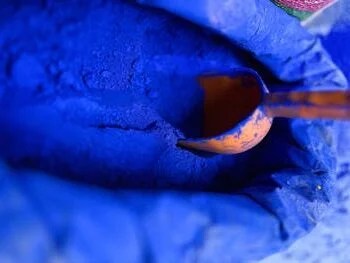
Phycocyanin is a natural blue pigment found almost exclusively in Spirulina. Research shows it has strong antioxidant and anti-inflammatory properties and may help protect cells from oxidative damage.
How does Spirulina benefit in immunity and inflammation?
Clinical reviews show that Spirulina’s antioxidants and other bioactives support immune function and help counter inflammation. This may be helpful in both everyday health and disease contexts, though more human clinical trials are needed to fully define effects.
Quality matters: look for products with independent third-party testing to screen for contaminants like heavy metals or microcystins. Brand transparency about cultivation conditions and lab certificates is an important trust signal.
Spirulina is not a substitute for a balanced diet. It is a concentrated supplement that can help fill nutrient gaps when used alongside healthy eating, not instead of it. (This is a general nutrition principle, supported by mainstream dietary guidelines.)
In general, Spirulina is safe for most people but people with certain health conditions i.e., autoimmune diseases, phenylketonuria (PKU), pregnancy or bleeding disorders should consult a doctor before taking Spirulina.
Spirulina itself does not naturally contain toxins, but poor cultivation conditions can lead to contamination with heavy metals or microcystins. Scientific reviews stress the importance of controlled cultivation and third-party testing which is the exact condition we are maintaining as our Spirulina is cultivated inside closed polyhouses and goes through stringent quality testing.
Spirulina contains compounds that are often referred to as vitamin B12-like molecules. However, research shows that most of this B12 in Spirulina is pseudo-vitamin B12, a form that is not biologically active in humans.